Why Posting Your Most Boring Moments Might Be the Smartest Thing You Do Online
Somewhere between the fifth perfectly lit flat lay and the third "authentic" morning routine video with a full face of makeup, something shifted. Audiences started tuning out. Not dramatically — nobody sent a formal complaint — but the engagement numbers quietly dipped, the saves slowed down, and people started scrolling faster through content that used to stop them cold.
And then a weird thing happened. Creators who started posting the boring stuff — the half-eaten bowl of cereal, the Saturday with no plans, the parking lot of a Trader Joe's — started gaining followers. Real ones. The kind who actually comment with something other than a fire emoji.
So what is going on?
We Are Exhausted by Perfection (Even When We Asked for It)
Here's the thing nobody really wants to admit: we trained the algorithm, and the algorithm trained us, and somewhere in that feedback loop we ended up in a world where everyone's life looked like a Pinterest board that came to life. And for a while? We loved it. It was aspirational. It was goals.
But aspiration has a shelf life. After years of consuming content that's been filtered, staged, and optimized within an inch of its life, a lot of us have developed what you might call perfection fatigue. It's that low-grade exhaustion you feel when everything you see online looks like it was produced by a small marketing team — even when it's supposed to be someone's "real life."
Psychologists have a name for what we're actually craving: parasocial intimacy. It's the feeling that you genuinely know someone, not just their highlight reel. And the fastest shortcut to that feeling isn't a confessional video or an emotional breakdown — it's the small, unremarkable details of a regular day.
The weird errand. The bad hair day that still happened anyway. The quiet Wednesday where nothing worth posting occurred, and someone posted it anyway.
The Math Behind the Mundane
Let's talk about why this actually works, because it's not just vibes — there's a real mechanic here.
When someone shares a polished, curated moment, our brains clock it as content. We appreciate it the way we appreciate a good ad — passively, at arm's length. But when someone shares something unglamorous? Something that carries zero obvious social currency? Our brains do something different. We start to trust them.
There's a concept in social psychology called costly signaling — the idea that gestures that cost something (status, image, effort) carry more weight than easy ones. Posting a gorgeous vacation photo costs you nothing socially. It only adds. But posting the airport delay, the sunburn, the hotel room that didn't look like the pictures? That costs a little something. And that cost is what makes it feel real.
Creators who lean into the ordinary are essentially saying, I'm not just here to impress you. And that message, even when it's unspoken, lands differently than any amount of carefully crafted captions ever could.
The Line Between Relatable and Oversharing
Okay, but — and this is important — there's a version of this that goes wrong. Because "sharing the boring stuff" can very quickly slide into "sharing everything," and those are not the same thing.
The creators who are doing this well aren't just dumping their lives online unfiltered. They're making intentional choices about which ordinary moments to share. The grocery run makes the cut. The three-hour anxiety spiral at 2 a.m. probably doesn't — at least not in raw, unprocessed form.
Strategic vulnerability is still strategic. The goal isn't to perform messiness the same way you used to perform perfection. It's to find the moments that are genuinely low-stakes but high-relatability. The stuff that makes someone watching think, wait, I did that exact thing yesterday.
There's a big difference between a creator who posts their unmade bed because they're comfortable enough not to care, and a creator who posts their unmade bed as a brand move. The first one feels like connection. The second one, eventually, starts to feel like another kind of performance — just with worse lighting.
What This Actually Looks Like in Practice
For anyone thinking about applying this to their own online presence — whether you're a full-time creator or just someone who posts occasionally — here's what the shift actually looks like in practice.
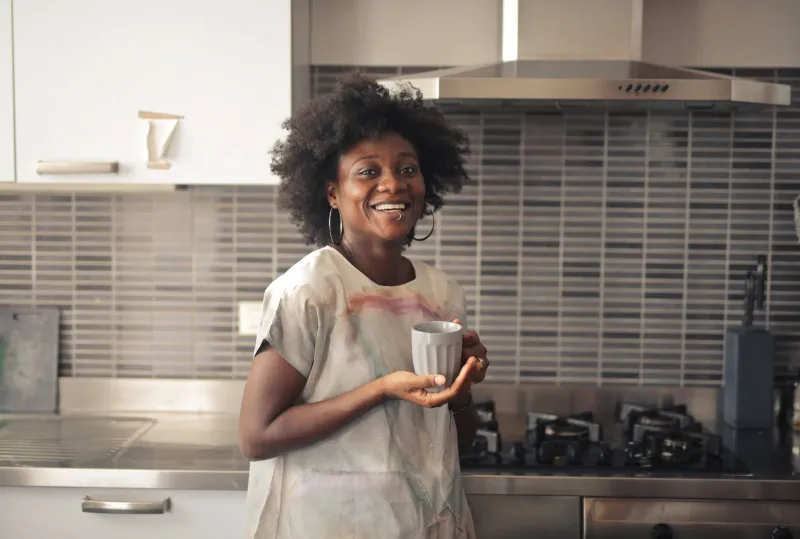
It's the B-roll of your day, not the A-roll. The coffee cooling down because you forgot about it. The walk you took because you needed to get out of the house, not because it was scenic. The book you started and aren't sure you like yet.
It's context without crisis. Sharing that you had a low-energy week doesn't require an explanation of everything that caused it. Sometimes the most connecting thing you can say is this week was a lot and leave it at that. People fill in their own version, and suddenly your experience becomes theirs.
It's consistency over curation. The creators building real loyalty right now aren't necessarily posting the most beautiful content — they're posting the most consistent content. Showing up regularly, even with nothing impressive to show, tells your audience that you're actually there. Not performing, not waiting for a perfect moment. Just there.
Why Anna World Gets This
Honestly, this whole conversation feels personal to me. Building something called Anna World means putting a real name — my name — at the center of everything. And the pressure to make that world look a certain way is real. There are days when I want everything on here to feel polished, intentional, worthy of the brand.
But the posts that have hit differently? The ones that actually got messages and DMs and comments that felt like real conversations? They weren't the ones I labored over. They were the ones where I said something true and small and a little bit ordinary.
That's the paradox nobody tells you about when you start building an online presence: the more you try to make everything impressive, the less impressive it feels. And the moment you let something just be real — genuinely, undramatically real — that's when people actually show up.
The Takeaway
The shift toward mundane content isn't a trend that's going to fade when the algorithm changes. It's a response to something deeper — a collective exhaustion with the performance of life and a genuine hunger for connection that doesn't require a ring light to feel valid.
So if you've been waiting for permission to post the unremarkable Tuesday, the errand you ran in yesterday's clothes, the afternoon that didn't go anywhere interesting — consider this your sign. The boring stuff might just be the most powerful content you've got.