Some Friendships Have an Expiration Date — And That's Not a Bad Thing
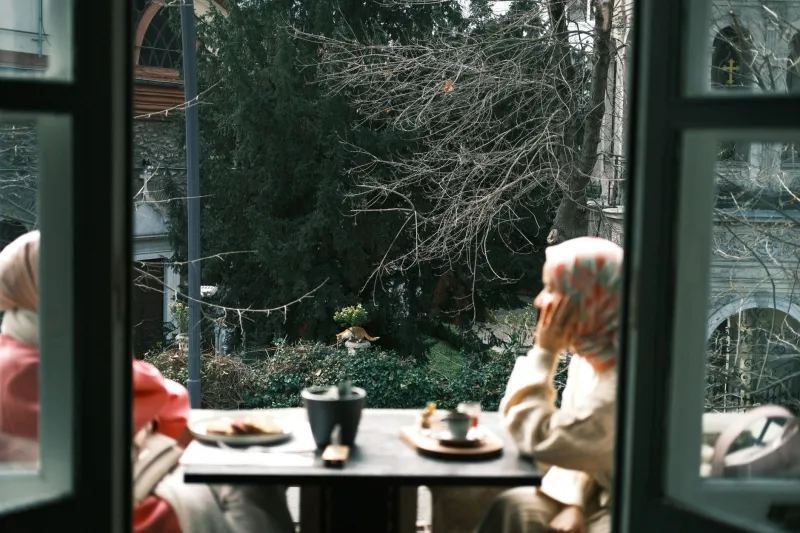
There's this moment I keep thinking about. I was at brunch with a friend I'd known since college — someone I'd called my person for almost a decade — and somewhere between the avocado toast and the second mimosa, I realized we had absolutely nothing to talk about anymore. Not in a dramatic, fight-it-out kind of way. Just... silence. Comfortable on the surface, but hollow underneath.
That was about two years ago. We don't really talk anymore. And honestly? I'm still figuring out how to feel about it.
If you've been hanging around Anna World for a while, you know I try to keep it real. So let's talk about something that doesn't get enough airtime in the lifestyle space: the slow, uncomfortable, sometimes heartbreaking process of outgrowing your friends.
The Shift Nobody Warned Me About
When my life started getting more public — more documented, more shared — I assumed my real friendships would stay exactly the same. I thought the people who knew me before all of this would just... keep knowing me. Easy, right?
Wrong.
What actually happened was messier and more nuanced than I expected. Some friends got weird about it. Not mean, just... different. There were offhand comments about me "changing," questions that felt more like interrogations, and this low-key tension whenever I'd mention anything related to my work or my growing online presence. A few people started treating me like I owed them something — access, attention, a platform — simply because we used to split a Domino's pizza in a dorm room at 2 a.m.
And here's the thing I had to sit with: sometimes the friendship wasn't actually the problem. Sometimes we'd just grown in genuinely different directions. That's not a villain origin story. That's just life.
The Vibe Check That Stopped Working
For most of my twenties, I had a pretty reliable internal compass for friendships. You know the feeling — you're around certain people and everything just clicks. Conversation flows, you laugh until your stomach hurts, you leave feeling full. That was my vibe check. Simple, instinctive, effective.
But at some point, the vibe check stopped being enough. Because vibes are a snapshot, not a whole story. Someone can feel familiar and comfortable and still be pulling you backward. A friendship can feel easy simply because it's old — because you've both agreed, without ever saying it out loud, not to challenge each other anymore.
I had to learn the difference between a friendship that feels good and a friendship that's actually good for you. Those aren't always the same thing.
Setting Boundaries With People Who've Known You Forever
This is the part that trips most people up, myself included. Because how do you set a boundary with someone who knew you before you had anything to protect?
For me, it started small. Saying no to plans I genuinely didn't want to attend. Stopping myself from over-explaining my choices to people who weren't going to understand them anyway. Not sharing every update about my life with every person who had my number.
Some people respected it. Some didn't.
The ones who didn't — who pushed back, who made it about them, who accused me of being too big for my britches (yes, someone actually said that to me) — those friendships faded. Not because I ended them with some big declaration. But because a relationship that can't survive you having boundaries was never as solid as it looked.
If you're navigating this right now, here's what I'd tell you: you don't owe anyone a detailed explanation for your evolution. A simple "I've got a lot going on right now" is a complete sentence. So is "that doesn't really work for me anymore."
The Quiet Grief of Drifting Apart
I want to be honest about something: losing a long-term friend, even when it's mutual and even when it makes sense, still hurts. It's a specific kind of grief that doesn't get a lot of cultural acknowledgment — no Hallmark card for it, no socially accepted mourning period. You just kind of... carry it.
I've had moments where I'll see an old friend's Instagram story and feel this pang of something. Not regret, exactly. More like nostalgia for a version of myself that doesn't really exist anymore. The Anna who needed that friendship — she was real. She mattered. But she's not who I am today.
Allowing yourself to grieve a friendship without villainizing the other person (or yourself) is genuinely hard. But it's also the most grown-up thing I've learned to do.
How to Know When a Friendship Has Run Its Course
I'm not here to tell you to audit your friend group like a spreadsheet. But if you're feeling that hollow-brunch energy I described at the top, here are a few honest questions worth sitting with:
- Do you leave conversations feeling energized or drained? Consistently drained is information.
- Are you editing yourself constantly? If you can't be honest about your actual life, what are you really sharing?
- Is the friendship reciprocal? Effort, support, and genuine interest should flow both ways.
- Are you holding on out of history or genuine connection? There's a difference between a friendship and a shared scrapbook.
None of these questions have easy answers. But asking them is a start.
Making Space for What's Next
Here's the part I didn't expect: when I stopped holding onto friendships that had run their course, I had more room — emotionally, energetically, literally in my schedule — for the ones that were actually growing with me. New people came into my life who got it. Old friends I'd underestimated showed up in beautiful ways. The quality of my close relationships went way up when I stopped treating quantity like a measure of success.
Friendship isn't a numbers game. You don't get a prize for having the most people at your birthday dinner.
Some connections are meant to be lifelong. Some are meant to teach you something and then gracefully exit. Both kinds are valid. Both kinds are worth honoring — and then, when the time comes, releasing.
So if you're in that weird in-between space right now, feeling guilty about a friendship that's quietly ending, I just want you to know: you're not a bad person. You're just a person who's growing. And that's kind of the whole point.